Wednesday, March 27, 2024
This Rebel Heart
Friday, September 30, 2022
Operation Snow: How a Soviet Mole in FDR's White House Triggered Pearl Harbor
Tuesday, September 20, 2022
A Time of Fear: America in the Era of Red Scares and Cold War
Wednesday, October 27, 2021
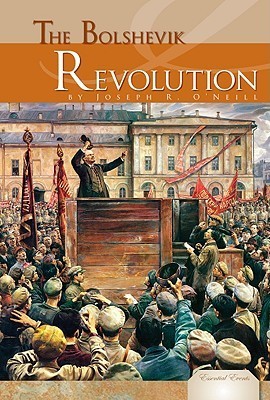
The Bolshevik Revolution
O'Neill, Joseph R. The Bolshevik Revolution. 2009. 112p. ISBN 9781604535112. Available at 947.084 ONE on the library shelves.

The late 1800s and early 1900s was a time of social upheaval. Nationalism was emerging, empires were tittering on the verge of collapse, and social inequities between the vast lower classes and those who controlled wealth and the means of production were deeper than before. Russia, which was a military powerful but economically mismanaged and therefore weak country, was governed by an absolute monarch, the Tsar, who could do what he pleased. Social advancement was next to impossible, and corruption was endemic.
Revolutionaries guided by Vladimir Lenin took inspiration from Karl Marx's the Communist Manifesto and sought to violently overthrow the monarchy and establish in its place a dictatorship of the workers. Russia's economic backwardness meant that the country was still overwhelmingly agrarian, and that workers were a relatively small number of individuals within the economic system. Several protests and strikes took place in the first decade of the 1900s and were violently repressed.
The First World War dislocated Russian economic activities, and incompetence at the front led to a military collapse. Seeing their chances, in October 1917 Lenin and others led workers in rebellion, and they managed to overthrow the government and seizing control of the state apparatus. Out of the ashes of the conflict emerged the USSR, which would come to dominate the communist world for seventy years, until its collapse in 1991.
Tuesday, October 1, 2019
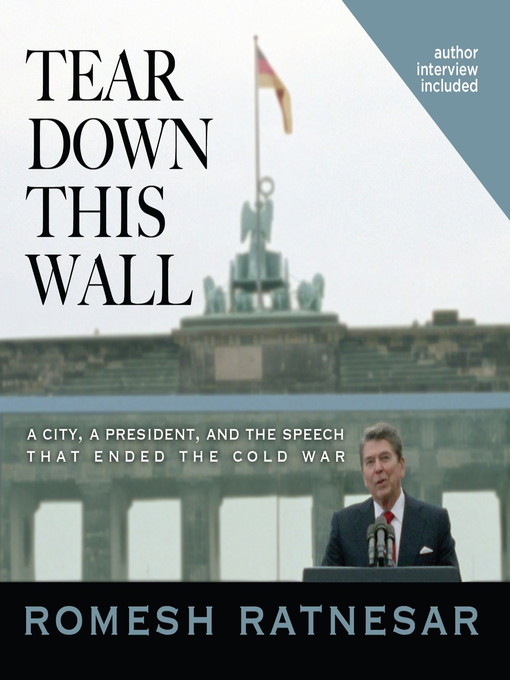
Tear Down This Wall

When the Second World War ended with the defeat of Germany, the country was separated into four zones of control. On the Western side, the zones quickly coalesced together to form the Federal Republic of Germany, whereas the Eastern side, controlled by the Soviet Union, a puppet Communist government was enshrined as the Democratic Republic of Germany (GDR). Dividing the two was an iron curtain stretching from the Baltic Sea to the Black Sea. The city of Berlin was similarly separated, even though it was deep in the center of the GDR. In 1961, hoping the stem the flow of people from East to West Berlin and thence to Western Europe, the East German security apparatus erected a wall, cutting the city in half. The Berlin Wall became the deadly and ugly symbol of division between East and West.
In 1987, U.S. President Ronald Reagan visited Berlin for the second time of his Presidency, and he pronounced a speech in front of the Berlin Wall that stood just before the Branderburg Gate in which he bemoaned the separation of people and dared Secretary General of the Soviet Union, Mikhail Gorbachev, to tear down the wall and allow people to freely travel. This speech, which was little noted at the time, proved prophetic as the Berlin Wall fell two and a half years later.
Tear Down This Wall is a historical account of the division of Germany, the life and times of Reagan and Gorbachev, the Cold War confrontation between Americans and Russians, and the origins, pronouncement, and impact that the speech had on world history. The audiobook contains the actual speech given by Reagan, as well as extensive interviews with government officials in the Reagan administration as well as American, Russian, and German eyewitnesses to this event.
Fans of history will appreciate the impact the speech had in retrospect on the events that occurred leading to and during the fall of the Berlin Wall, and will develop a newfound respect for collaboration and trust that the two adversaries developed. It is this, more than anything else, that helped both of them "win" the Cold War and avoid the world's destruction, which had seem so plausible a year or two earlier.